
Colleton County Arrest Records and Court Charges
Arrest records in Colleton County are different from court charge records. The arrest side is tied to law enforcement, custody, booking, warrants, holds, and release status. The charge side begins when an accusation is filed or carried into court through a ticket, warrant, complaint, indictment, or other charging paper. A single arrest can produce no filed court charge, one court charge, or several charges that later change as the Solicitor reviews the case.
The county-linked jail roster can show current custody details, including hold reasons, charge labels, warrant types, statute codes, bond type, bond amount, and judicial officer when provided. The full court case, including pleas, motions, disposition, and sentence, belongs in the criminal court file. For that case-level outcome, use Colleton County criminal court records. For current custody, the official jail roster and Sheriff's Office channels are the correct starting point.
The county-linked current inmate portal is the official web source that can reveal current arrest, hold, and charge details for people in local custody.
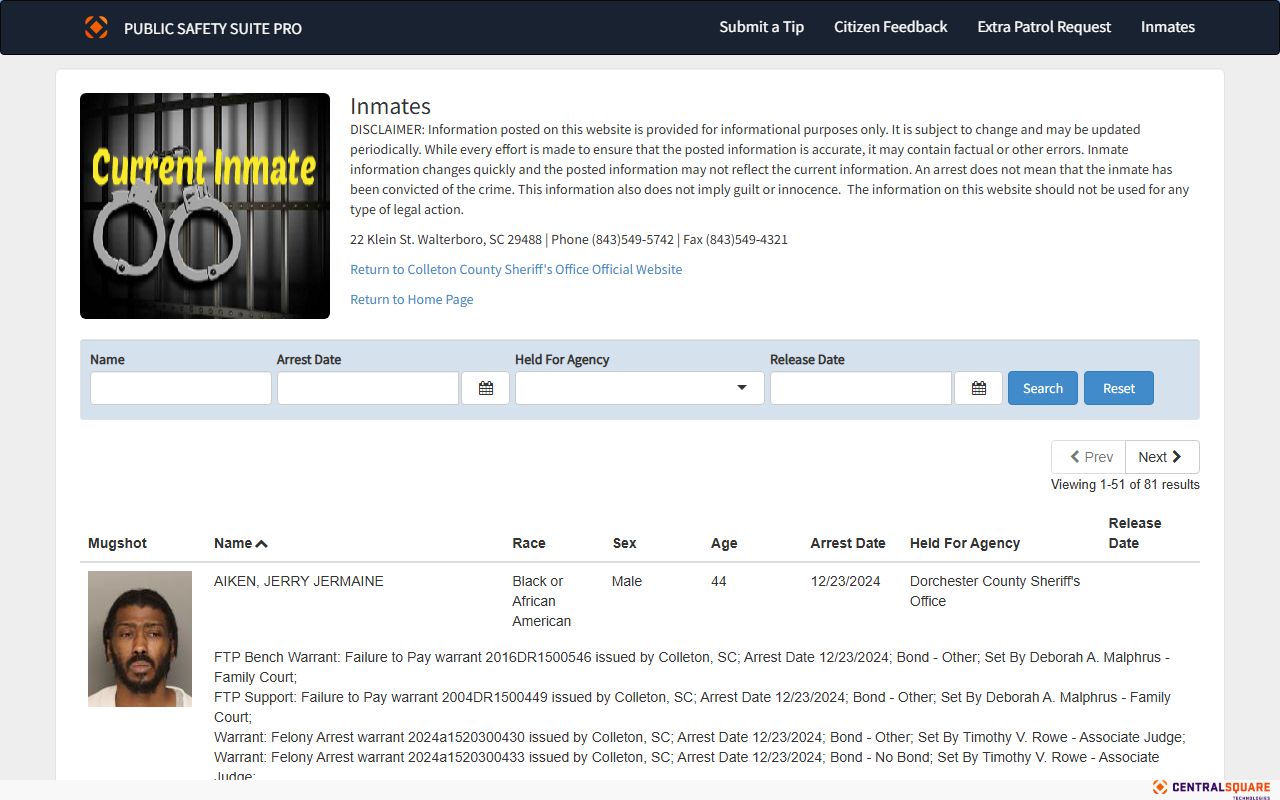
That roster is not a conviction list, but it is a key access point for current arrest-related charge and hold information.
Access Colleton Arrest Records and Charges
Colleton County has several official access channels, and each answers a different question. The jail roster answers whether a person is currently held and what visible hold reasons or charges are listed. The Public Index answers whether a court case has opened and what the court docket shows. The Fourteenth Circuit Solicitor answers prosecution and diversion questions. The Sheriff's Records Unit and FOIA process answer report, incident, and law-enforcement-record requests that are not in the court index.
- Use the county-linked jail roster for current custody, release date, held-for agency, hold reason, bond, and charge labels.
- Use the Colleton County Public Index to search the defendant name or case number after a court case opens.
- Call the Sheriff's Records Unit at 843-549-1203 or email ccso-records@colletoncounty.org for incident or report channels.
- Use the Sheriff's FOIA process at ccso-foia@colletoncounty.org for records not published online.
- Contact the Fourteenth Circuit Solicitor's Colleton office for prosecution, diversion, victim-services, or expungement routing questions.
The Sheriff's divisions page identifies the records staff and warrant/civil process staff who support arrest, warrant, and records channels.
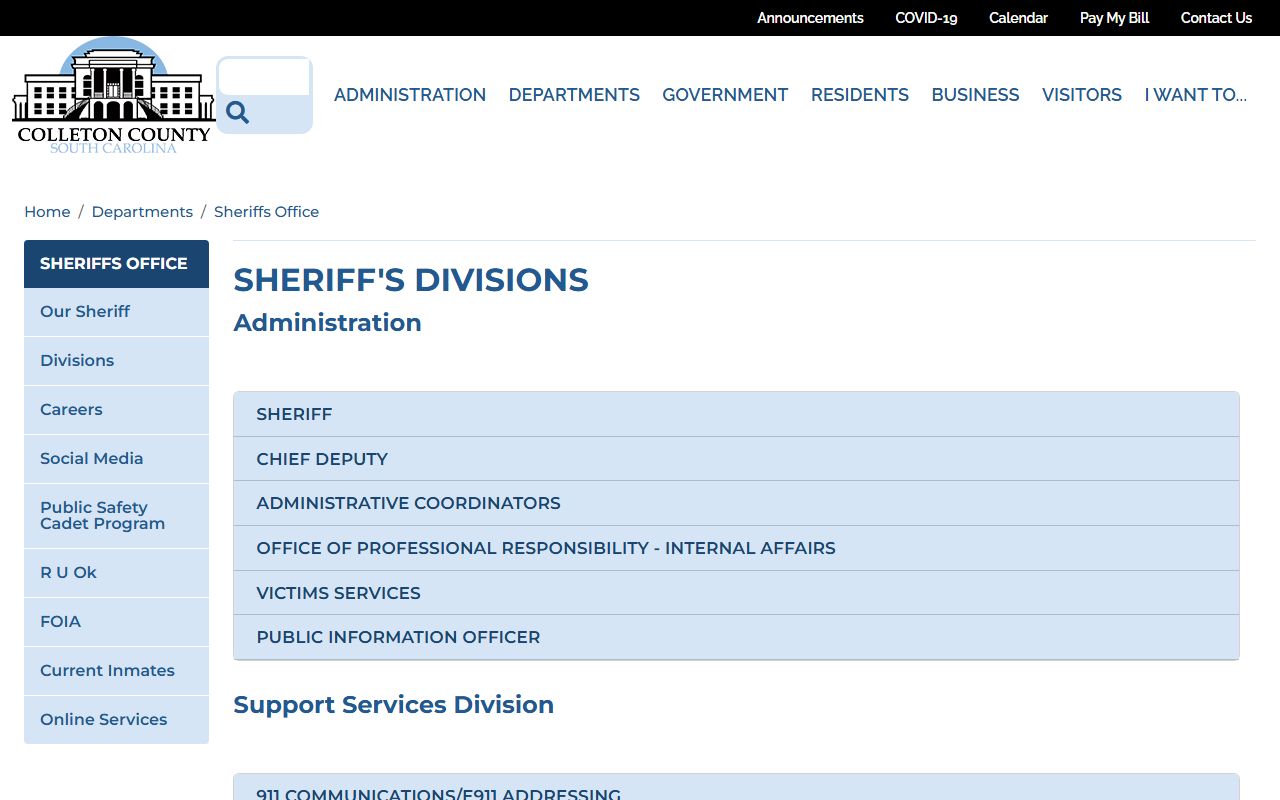
Those unit contacts are useful when an arrest event exists but the court charge is not yet visible in the Public Index.
Colleton County Charging Documents
Court charges after arrest are created through a formal charging path. South Carolina uses the term Solicitor for the local prosecutor. Colleton County is in the Fourteenth Circuit Solicitor's Office, which prosecutes General Sessions cases, certain Magistrate Court misdemeanors, and criminal cases in Family Court. Officers may make arrests and reports, but the court charge record depends on what is filed, accepted, amended, indicted, dismissed, or resolved in court.
| Document | Who Uses It | What It Does | Where It May Appear |
|---|---|---|---|
| Complaint or ticket | Officer, agency, or summary-court process | States the alleged offense and starts or supports a lower-court case. | Magistrate, municipal, traffic, or related court record. |
| Warrant | Judge or issuing court with law enforcement | Authorizes arrest or records a bench or failure-to-pay hold. | Inmate hold reasons, warrant/civil process, or court file. |
| Indictment | Grand jury and Solicitor | Formally charges serious criminal matters in General Sessions. | General Sessions criminal court record. |
The Solicitor's Office contact page lists the Colleton office on the second floor of the courthouse and provides prosecution-office contact details. That office is relevant to charge filing, diversion, victim-service coordination, and expungement routing, while the Clerk keeps the filed court record. This division of roles helps explain why a sheriff arrest record, a prosecutor charge decision, and a court case entry may not appear at the same time.
Colleton County Charge Status
Charge status can change after arrest. A charge listed at booking may be reviewed, amended, reduced, dismissed, indicted, or resolved by plea or trial. The court record is the right source for the current status once the case exists. If the only public record is a jail hold, the case may be too new, may be pending filing, or may belong to another court or agency.
In Colleton County, the first public sign may be a hold reason in the jail roster. Later, the Public Index may show a General Sessions, Magistrate, or municipal case. The charge wording can differ between those sources because the jail entry reflects custody status and the court entry reflects a filed case. Use the court disposition, not the booking label, to decide how the matter ended.
| Status | What It Means | Where to Verify |
|---|---|---|
| Pending | The charge is still active and has not reached a final outcome. | Public Index, Clerk, Solicitor, or issuing court. |
| Amended | The charge wording, code, severity, or count changed after filing. | Case docket and filed order or prosecutor entry. |
| Reduced | The charge changed to a lesser offense or lower severity. | Disposition, plea, or amended charge entry. |
| Dismissed | The court ended the charge without a conviction on that count. | Disposition entry or order. |
| Nolle prosequi | The prosecutor declined to continue that charge. | Solicitor or court disposition entry. |
| Convicted | The charge ended in a guilty plea, verdict, or finding. | Disposition and sentence sheet. |
Charges vs Convictions
A Colleton County arrest record can list a charge or hold before any final court result. That listed charge is not the same as a conviction. A conviction requires a final guilty plea, verdict, or qualifying finding. This distinction matters for employment screening, housing, licensing, and personal review because a record can show an arrest, a filed charge, a dismissed charge, and a later expungement path as separate events.
| Point | Charge | Conviction |
|---|---|---|
| Core meaning | An accusation filed or listed after arrest. | A final court outcome finding guilt. |
| May appear where | Jail roster, warrant hold, Public Index, ticket, indictment. | Disposition, sentence sheet, final criminal court record. |
| Can change | Yes, it can be amended, reduced, dropped, or dismissed. | Only later court action changes the final outcome. |
| Best local source | Jail roster, Public Index, Solicitor, or Clerk. | Criminal case disposition and sentence record. |
Colleton Arrest Records FOIA
When arrest-related records are not in the jail roster or Public Index, the Sheriff's Office FOIA channel is the local records fallback. South Carolina FOIA requires public bodies to respond to written requests within set working-day periods, subject to exemptions. The Colleton Sheriff's FOIA page asks requesters to email ccso-foia@colletoncounty.org. The 2026 Sheriff's FOIA form lists fees for search, retrieval, redaction, media, and paper copies, and says payment is required before release.
The Sheriff's FOIA form also notes that a deposit may be required based on estimated research time. That fee process belongs to sheriff records, not court-certified copies. For a filed criminal case record, use the Clerk or the court that holds the case. For an incident report, arrest report, body-camera question, or law-enforcement file, use the Sheriff's records and FOIA channels.
The Colleton County Sheriff's FOIA page is the official page for law-enforcement records requests.
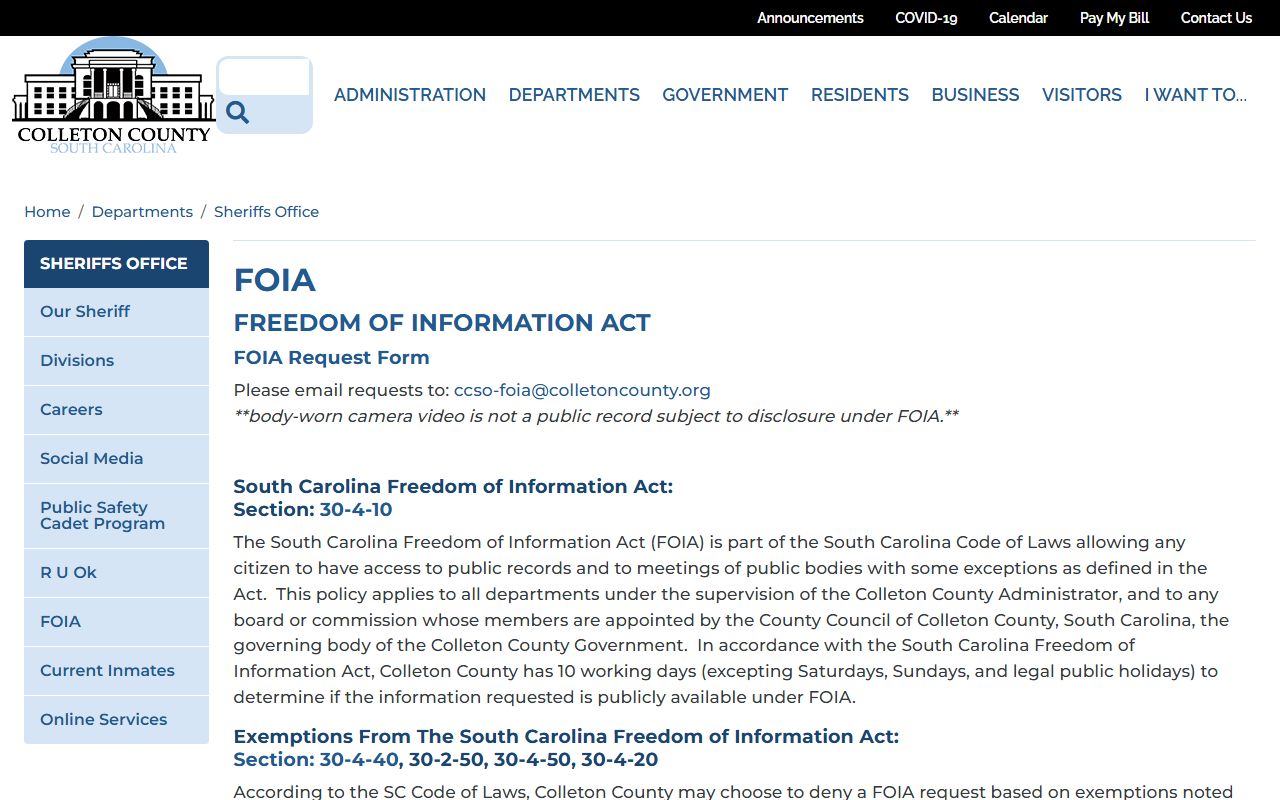
FOIA is most useful for sheriff reports and law-enforcement records, not for certified court copies held by the Clerk.
The Sheriff's incident-report FAQ explains that incident reports may be inspected within a 14-day window and then requested through the records or FOIA channel.
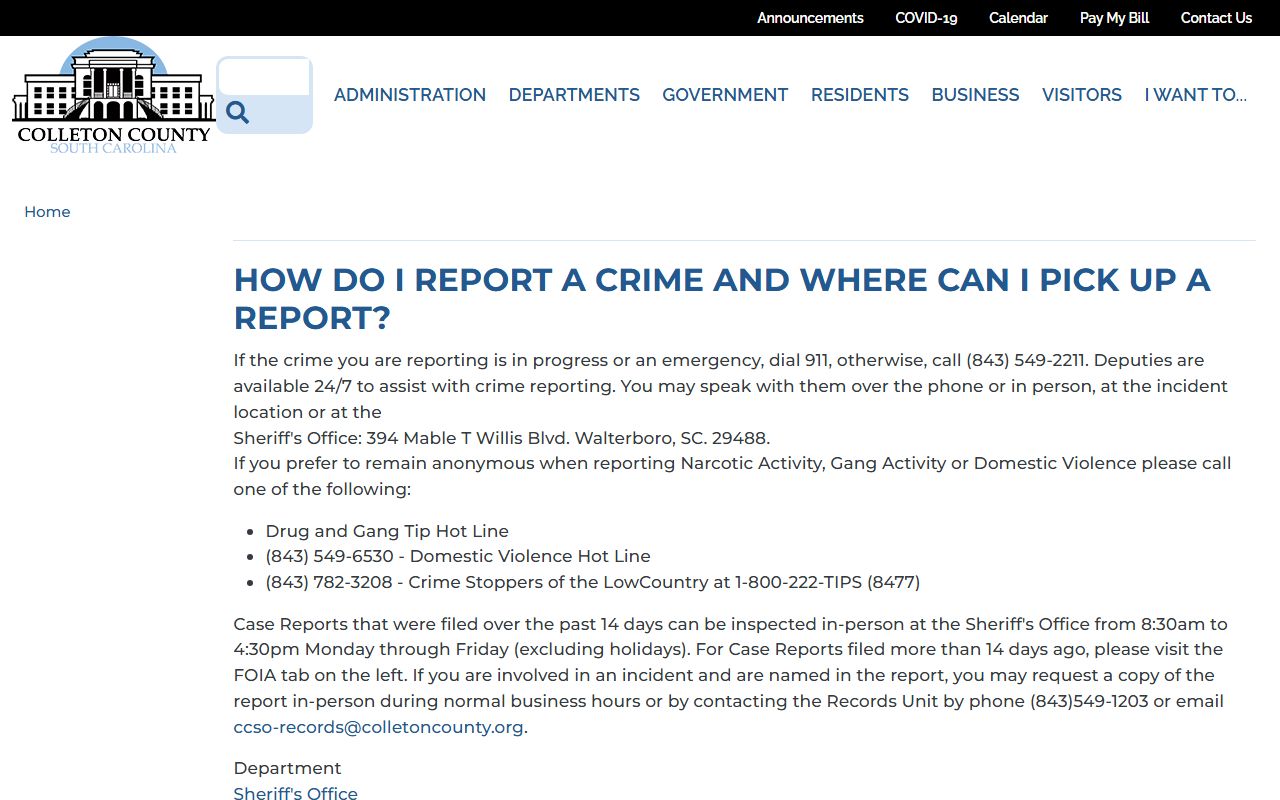
That process helps separate a sheriff incident report from the formal court charge record that follows if charges are filed.
Restricted Colleton Arrest Records
Some arrest records and court charges are restricted. Juvenile records and related official information are confidential except through court order or specific statutory access. Sealed and expunged records should not be expected in public search results. Mental health and certain Family Court matters have separate confidentiality concerns. Personal identifiers may be redacted, and South Carolina public index systems no longer display home addresses for new and existing cases as of January 1, 2026.
| Point | Sealed | Expunged |
|---|---|---|
| Public access | Hidden or limited by law or court order. | Removed from public access after an eligible order. |
| Typical reason | Confidentiality, juvenile status, or court order. | Eligible charge and qualifying disposition under statute. |
| Colleton route | Contact the issuing court or Clerk. | Contact the Fourteenth Circuit Solicitor for application routing. |
South Carolina's Title 17 Chapter 22 expungement statutes are the legal source for many record-clearing questions.
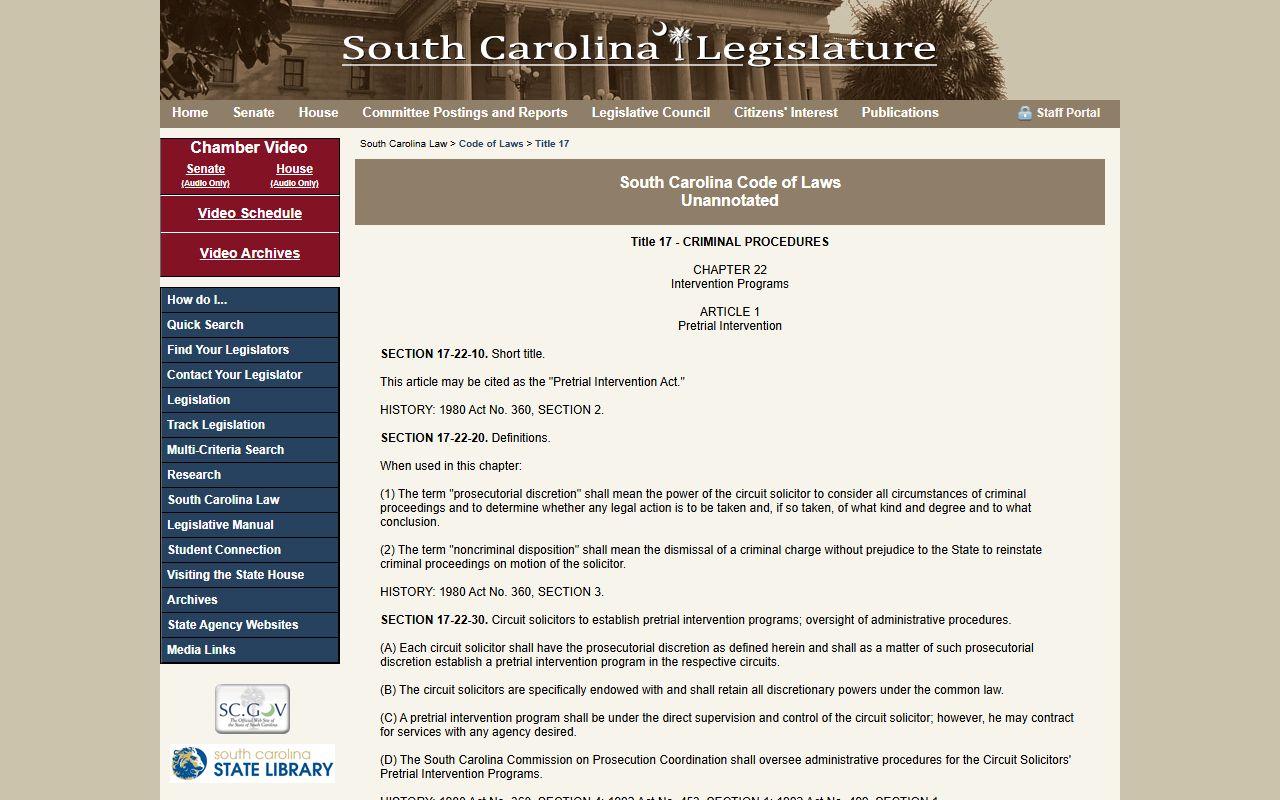
Expungement changes public access to qualifying records, but eligibility depends on charge type, disposition, timing, and prior record.
Note: Absence from a public jail roster or Public Index is not proof that no arrest, charge, or warrant exists.