
Colleton County Criminal Court Records
Criminal court records in Colleton County are mainly General Sessions records in Circuit Court. The Colleton County Clerk of Court maintains records of criminal cases heard in General Sessions, and the county Clerk page specifically lists sentence sheets, arrest warrants, tickets, bonds, indictments, and pleadings as criminal records. The criminal court record begins once a case is opened in court and continues as the charge moves through hearings, pleas, trial settings, disposition, sentencing, fines, and later filings.
Lower-level criminal matters may start in Magistrate Court or Municipal Court. Magistrate Court handles summary criminal matters within statutory limits, bond, preliminary hearings, and warrants. Municipal Court handles municipal ordinance and qualifying traffic or criminal matters inside the municipality. Felony prosecutions and more serious criminal case files route through General Sessions, with prosecution handled by the Fourteenth Circuit Solicitor. Charge-specific lookup belongs with the arrest and charge pathway, while the full outcome belongs in the court case file.
The Fourteenth Circuit Solicitor is the prosecuting office for Colleton County criminal matters in Circuit 14.
The Solicitor channel matters when the issue is prosecution, diversion, victims services, or expungement routing rather than a copy of the court file.
Search Colleton County Criminal Records
The main online source is the Colleton County Public Index. Search by case number if it is known. If not, use the defendant name, case type, date range, court agency, or action type. The South Carolina Judicial Branch guide says results appear in a grid, case numbers open case detail pages, and bold tabs may show actions filed, financial information, and document image icons when available.
- Open the Colleton County Public Index from the Judicial Branch case records search page.
- Accept the disclaimer, complete the security check, and start with a case number or defendant name.
- Add filters such as case type, court agency, date type, or action type only when the result set is too broad.
- Open the case number and read the docket actions, charge entries, disposition, financial entries, and available document icons.
- Request certified copies or records not shown online from the Clerk of Court at 101 Hampton Street.
Custody and booking details are different from criminal court records. A person who is currently held at the Colleton County Detention Center may appear in the county-linked jail roster, but the court file controls the formal case record. The detailed arrest-to-charges path is handled separately in Colleton County arrest records and court charges.
The Solicitor's overview page identifies Solicitor Duffie Stone and describes the office's five-county prosecution role.
That source helps distinguish the prosecuting office from the Clerk, which maintains filed court records.
Colleton County Criminal Case Flow
A criminal case record grows by stage. An arrest, warrant, or ticket may appear before the final charging decision. After charges are filed, the case can move through arraignment, bond activity, motions, plea negotiations, trial settings, verdict, disposition, sentencing, fine or cost entries, probation terms, and post-conviction filings where applicable. The docket action list is the spine of the record, but the full file can hold the documents behind those entries.
Case flow: Charges Filed › Arraignment › Pretrial / Motions › Plea or Trial › Disposition › Sentencing
| Stage | What It Means in the Record |
|---|---|
| Charges Filed | The accusation enters court through a ticket, warrant, indictment, or other charging document. |
| Arraignment | The court formally presents charges and the defendant may enter a plea. |
| Pretrial / Motions | Attorneys file requests, set hearings, address evidence, or negotiate case terms. |
| Plea or Trial | The case resolves through a plea, trial verdict, dismissal, or other court disposition. |
| Sentencing | The court records sentence sheets, fines, costs, probation, confinement, or other terms. |
What Colleton Criminal Records Show
Colleton County criminal court records can combine official Clerk-held items and Public Index entries. The research identifies charges and indictments, arrest warrants and tickets, bonds, pleadings, sentence sheets, fine or cost payment entries, Solicitor and defense appearances, pleas, dispositions, sentencing, probation, and post-conviction filings when applicable. Not every document image is online, and not every event is public.
| Field | What It Shows |
|---|---|
| Case Number | The unique court identifier for the criminal case. |
| Defendant | The person charged and party role in the case. |
| Charges | The offenses filed in court, which may later be amended, reduced, dismissed, or resolved. |
| Warrants / Tickets | Original court or law-enforcement documents listed by the Clerk as General Sessions records. |
| Bond | Release conditions, bond type, bond amount, or custody-related case entries when public. |
| Pleadings / Motions | Formal filings by the state, defense, or court. |
| Plea / Trial | The case path toward guilty plea, not guilty verdict, conviction, acquittal, dismissal, or other result. |
| Disposition / Sentence | The current or final outcome and sentence sheet details. |
| Financial Entries | Fines, fees, costs, and payment entries where public. |
The South Carolina Commission on Indigent Defense county index identifies public defender resources for criminal defendants who qualify.
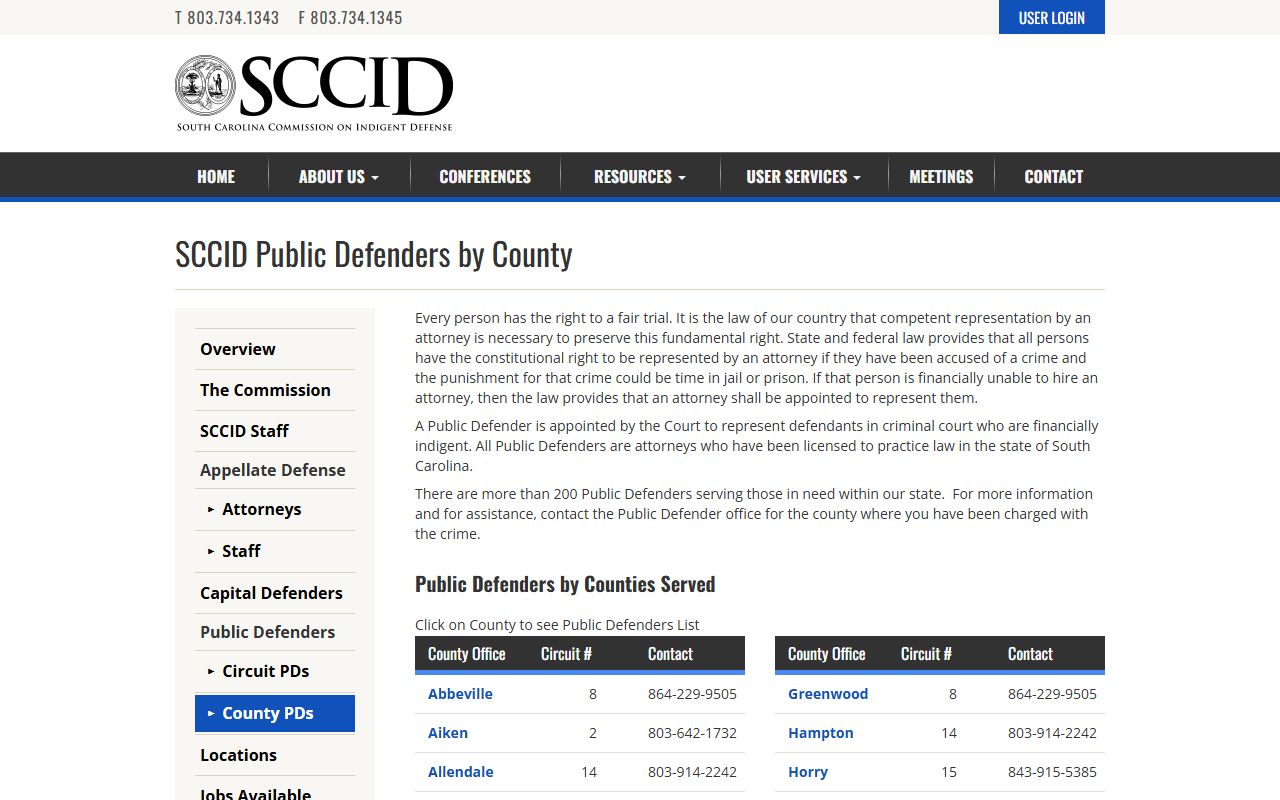
Defense counsel information can affect how a criminal case record is interpreted, but appointment details are not the same as disposition.
Charges vs Convictions
A Colleton County criminal court record can show charges that never became convictions. Charges are allegations filed by the state. A conviction comes only after a guilty plea, trial verdict, or other finding that results in conviction. A dismissed charge, nolle prosequi entry, acquittal, or reduced charge should not be read as the same outcome.
| Point | Charge | Conviction |
|---|---|---|
| Meaning | An accusation filed in court. | A final finding or plea resulting in guilt. |
| Timing | Early or mid-case. | At disposition or sentencing. |
| Can change | Yes, charges may be amended, dropped, or reduced. | Changes require later court action or appeal. |
| How to verify | Read charge and docket entries. | Read disposition and sentence entries. |
The official SCCID Colleton listing identifies local public defender contacts for criminal cases in the county.
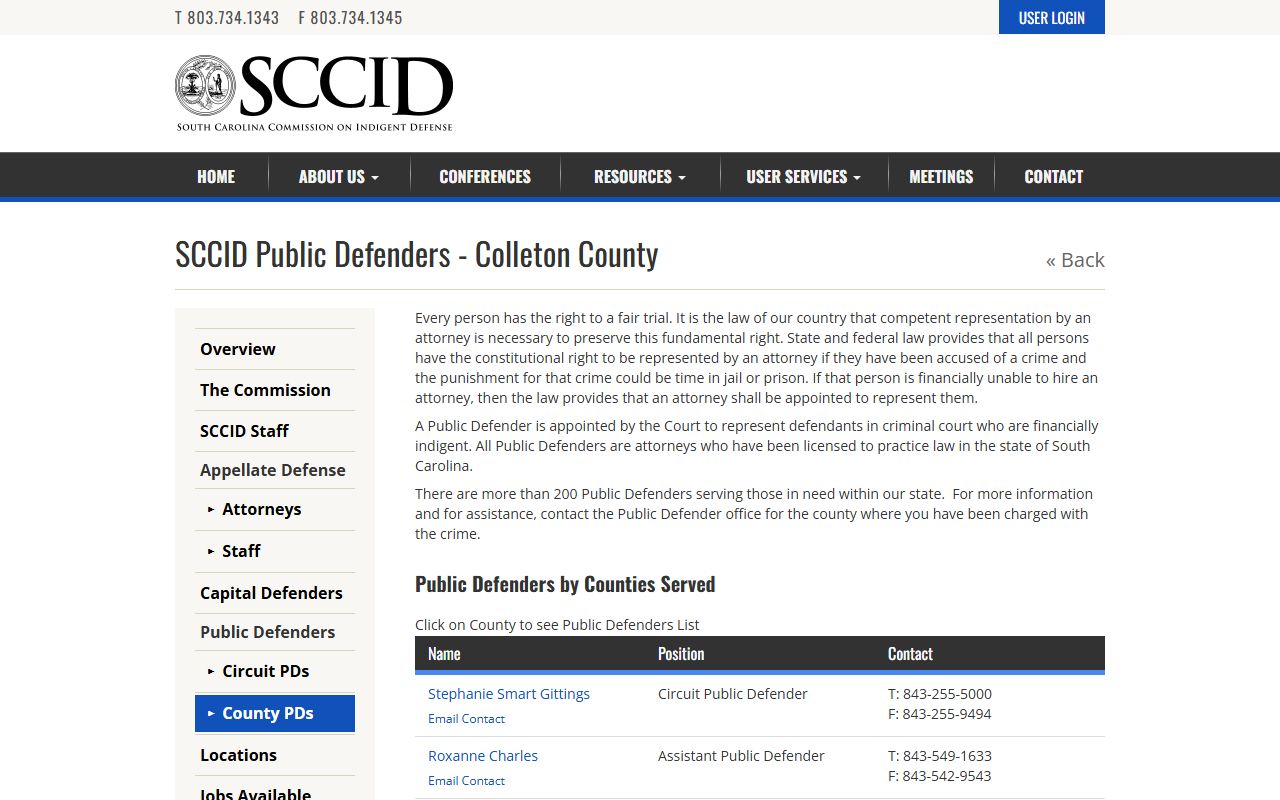
Public defender listings are useful for court process context, while the court record remains the source for case outcome.
Sealed vs Expunged Criminal Records
Restricted criminal records require careful reading. Juvenile records are confidential under South Carolina law except for court-ordered or statutory access. Sealed records are hidden from public access by court order or law. Expungement removes qualifying criminal records from public access, and South Carolina expungement applications generally move through the solicitor's office in the circuit where the charge originated.
| Point | Sealed | Expunged |
|---|---|---|
| Public visibility | Not shown to the public under the sealing authority. | Removed from public access after an eligible order. |
| Common route | Court order or confidentiality rule. | Application through the Solicitor for eligible charges. |
| Search result | May be absent or limited. | Should not be expected in ordinary public results. |
| Local contact | The court that sealed the matter. | Fourteenth Circuit Solicitor for Colleton County eligibility and processing. |
The South Carolina Judicial Branch Treatment Court overview explains diversionary court context that can appear around qualifying criminal cases.
Treatment court and diversion context can affect the path of a criminal case, but public access still depends on the case record and any later orders.
Access to Colleton Criminal Records
Public criminal court records are searched first through the Public Index, then verified through the Clerk of Court. South Carolina FOIA supports access to public records, but court records also follow judicial rules and case orders. S.C. Code Section 30-4-30 sets public-record request timing and fee rules for public bodies. South Carolina juvenile justice statutes restrict public juvenile records. Personal identifying information can also be redacted under court rules and privacy statutes.
The Fourteenth Circuit Solicitor has a Colleton office on the second floor of the courthouse, and the public defender system lists Circuit 14 Colleton contacts. These offices are not substitutes for the Clerk's filed record, but they explain prosecution, defense appointment, diversion programs, victim services, and expungement channels. For statewide criminal history questions that go beyond a single Colleton court file, use official state criminal-history channels rather than assuming the Public Index is a full background check.
Recent Colleton County court history also reinforces the need to verify the official file and the current appellate status. The South Carolina Supreme Court issued a May 13, 2026 opinion in a Colleton County criminal appeal that reversed and remanded for a new trial. That kind of later appellate action can change how a trial record should be read, even when the original docket remains searchable.
Note: A criminal court record can show allegations and case events, so verify the final disposition before drawing conclusions.
The SCCID biography for David S. Mathews is one official Colleton public defender source.
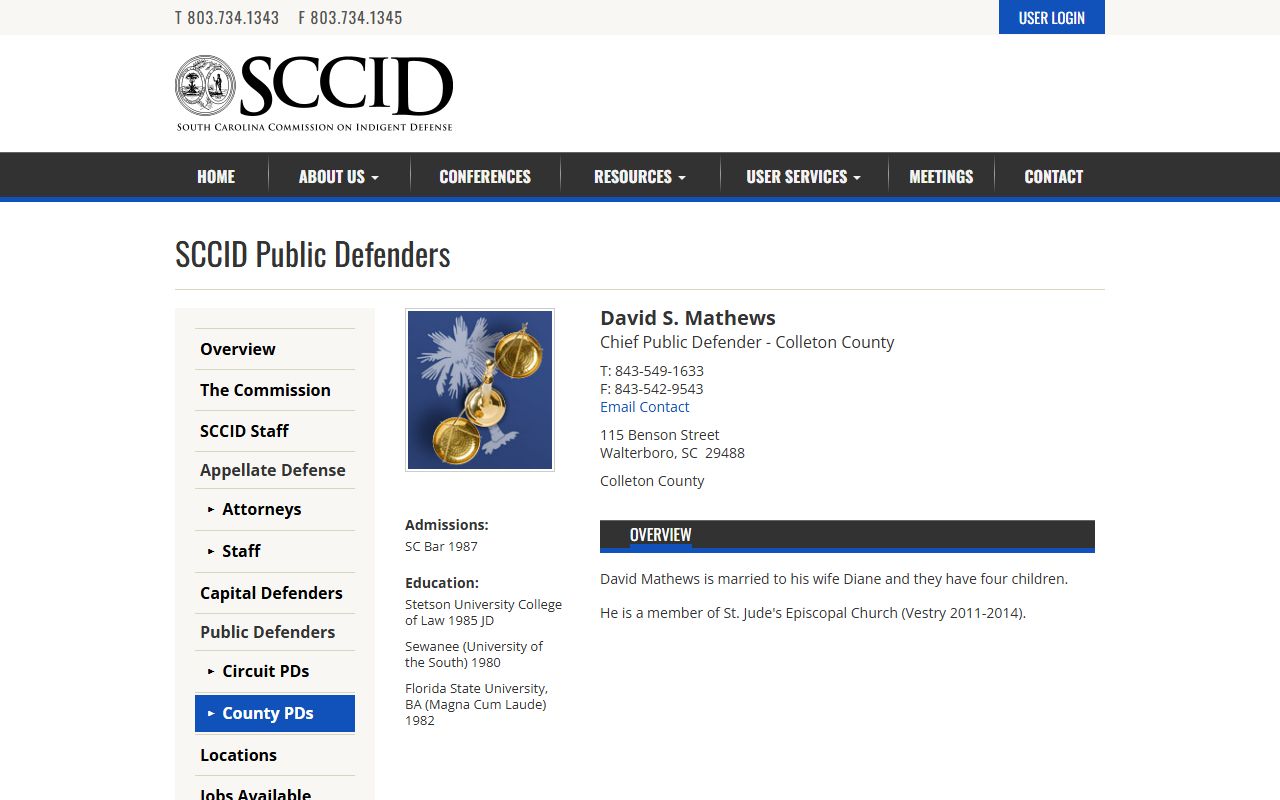
Use official defense and prosecutor links for role and contact context, not as the final proof of case outcome.